Transporting heavy machinery requires much more than simply having a vehicle with sufficient capacity. Depending on the dimensions, the weight of the load, and the planned route, specific permits, travel authorizations, and advance route planning may be necessary.
In addition, 2026 introduces new changes to document management in road transport, such as the requirement to use the Electronic Administrative Control Document (DeCA) for certain public freight transport operations.
In this article, we review the key factors you should consider to transport heavy machinery safely, legally, and efficiently.
What is considered heavy machinery?
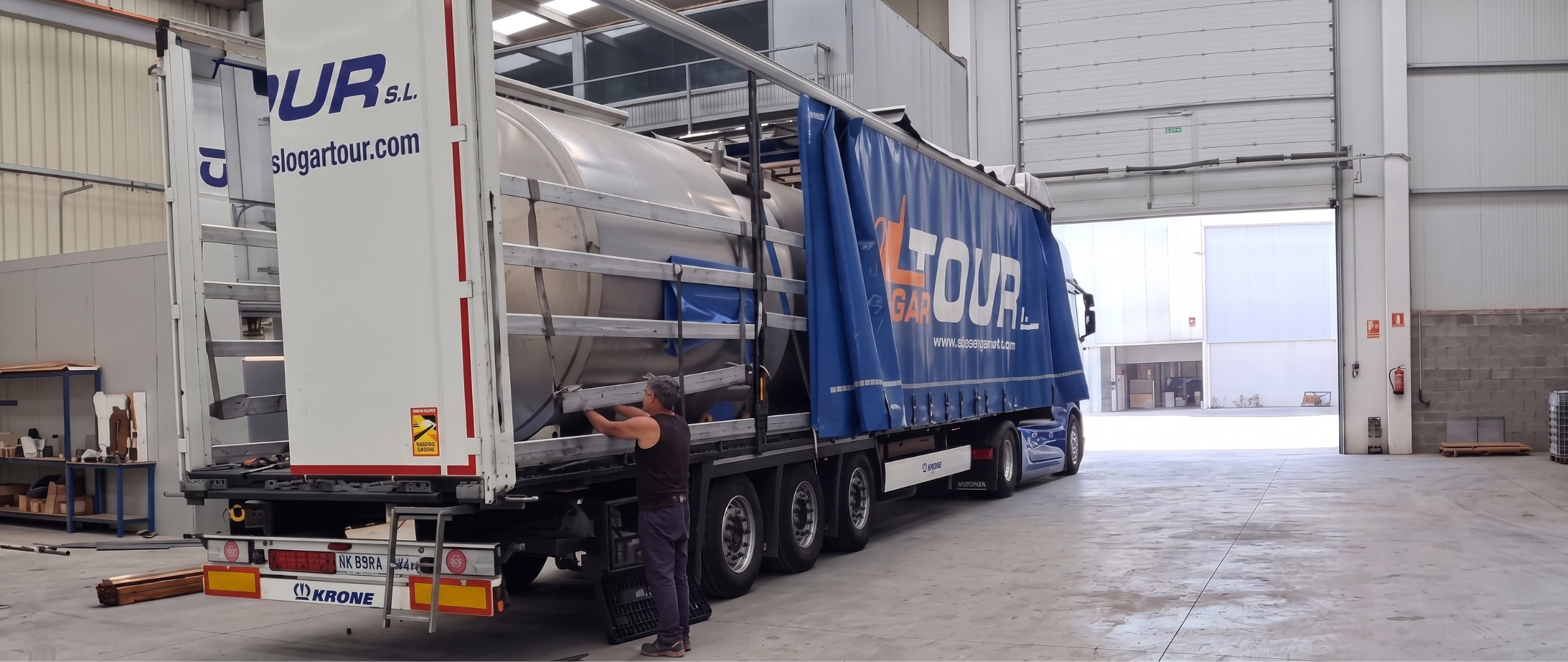
When we talk about heavy machinery, we are referring to equipment, vehicles, and structures that, due to their size, weight, or technical characteristics, require specific planning for their transport. This type of machinery cannot always be transported using conventional methods and, in certain cases, may require specially adapted vehicles, specific loading and unloading systems, or even special permits to travel on public roads.
This category includes a wide variety of equipment. In the industrial sector, for example, this may include production machinery, large-scale equipment, components of industrial production lines, or facilities that need to be moved between factories. In the construction and public works sector, excavators, backhoes, cranes, aerial work platforms, and other large-scale equipment are common. Certain types of agricultural equipment, specialty vehicles, or industrial components may also require special planning because their size prevents them from being transported by conventional vehicles.
However, just because a shipment is heavy or large does not automatically mean that it requires special transportation. What determines whether a shipment can be transported within the ordinary limits of traffic is, among other factors, the combination of the transport vehicle and the cargo.
For this reason, before arranging transportation, it is necessary to know the exact weight and dimensions of the machinery, including its length, width, and height when loaded. This information makes it possible to verify whether the established limits for road travel are met and to determine which type of vehicle is best suited for the job.
When the cargo causes the maximum permitted weights or dimensions to be exceeded, the operation may be classified as special transport and require a specific permit. In such cases, in addition to selecting the appropriate vehicle, it will be necessary to plan the route, check for any traffic restrictions, and obtain the necessary permits.
For this reason, transporting heavy machinery is not simply a matter of finding a truck with sufficient capacity to carry the load. The operation must be planned with due consideration for the characteristics of the cargo, the vehicle, the route, and the applicable regulations in each case. Proper advance planning allows for the anticipation of potential difficulties and helps prevent incidents during transport.
What do you need to transport heavy machinery?
The requirements for transporting heavy machinery depend on the characteristics of the load, the vehicle used, and the planned route. Before beginning transport, it is necessary to know the exact weight and dimensions of the machinery in order to determine the most suitable vehicle and verify whether the operation can be carried out within standard traffic regulations.
When the load exceeds the maximum permitted weights or dimensions, it may be necessary to obtain a Supplementary Traffic Permit (ACC) and plan the route taking into account road conditions and possible traffic restrictions. It will also be necessary to have the relevant transportation documentation and, for the affected services, the Administrative Control Document (DeCA).
Therefore, advance planning is essential to determine the necessary resources, manage the relevant permits, and ensure that the transport can be carried out in accordance with applicable regulations.
New dgital requirements: What is DeCA, and when will It become mandatory?
One of the major changes that will affect freight transport in 2026 is the mandatory digitization of the Electronic Administrative Control Document (DeCA).
The DeCA is the electronic version of the administrative control document used for certain types of public road freight transport.
Law 9/2025, dated December 3, on Sustainable Mobility, stipulates that the control document must be in digital format ten months after the law takes effect. The resulting date is October 5, 2026.
The new document must be generated digitally and be available in PDF format. In addition, it must include a QR code that provides access to a specific URL for the document. It must be generated before the service actually begins and retained for at least one year.
Therefore, digitizing the DeCA does not simply involve scanning a paper document and converting it to PDF. The document must be generated digitally from the data corresponding to each service.
For transportation and logistics companies, this change means adapting their document management to an increasingly digital environment and facilitating access to information during operations and potential roadside inspections.
What should you keep in mind before transporting heavy machinery?
Before beginning transport, it is necessary to verify that the machinery can be transported using the intended vehicle and that the applicable traffic regulations are met. To do so, you must take into account the machinery’s dimensions and weight, the vehicle’s specifications, and the selected route.
In certain cases, there may also be traffic restrictions for heavy vehicles or special transports that limit the days, times, or roads on which the operation can take place.
That is why planning the route in advance allows you to identify potential constraints, obtain the necessary permits, and properly coordinate loading and unloading. The goal is to avoid last-minute changes and reduce the risk of incidents or delays.
Transporting heavy machinery with proper planning
When an operation involves heavy machinery, large dimensions, or special traffic requirements, transportation planning plays a crucial role. It is not simply a matter of moving goods from one point to another, but rather of determining in advance how the service should be carried out so that it aligns with the characteristics of the cargo and the conditions along the route.
For this type of transport, it is necessary to evaluate factors such as the most suitable type of vehicle, the dimensions and weight of the cargo, the route, delivery deadlines, and any applicable administrative requirements.
At Logartour, we manage these types of shipments by taking into account the specific characteristics of each service and coordinating the various aspects to find a solution that is tailored to the cargo and the planned route.
This allows the customer to benefit from centralized transportation management, from initial planning through to delivery of the goods.
If you are considering how to transport machinery or cargo that, due to its size or characteristics, may require special conditions, the first step is to analyze the characteristics of the cargo and the planned route.
Do you need to transport heavy machinery? At Logartour, we can help you find the best transportation solution for your needs.