

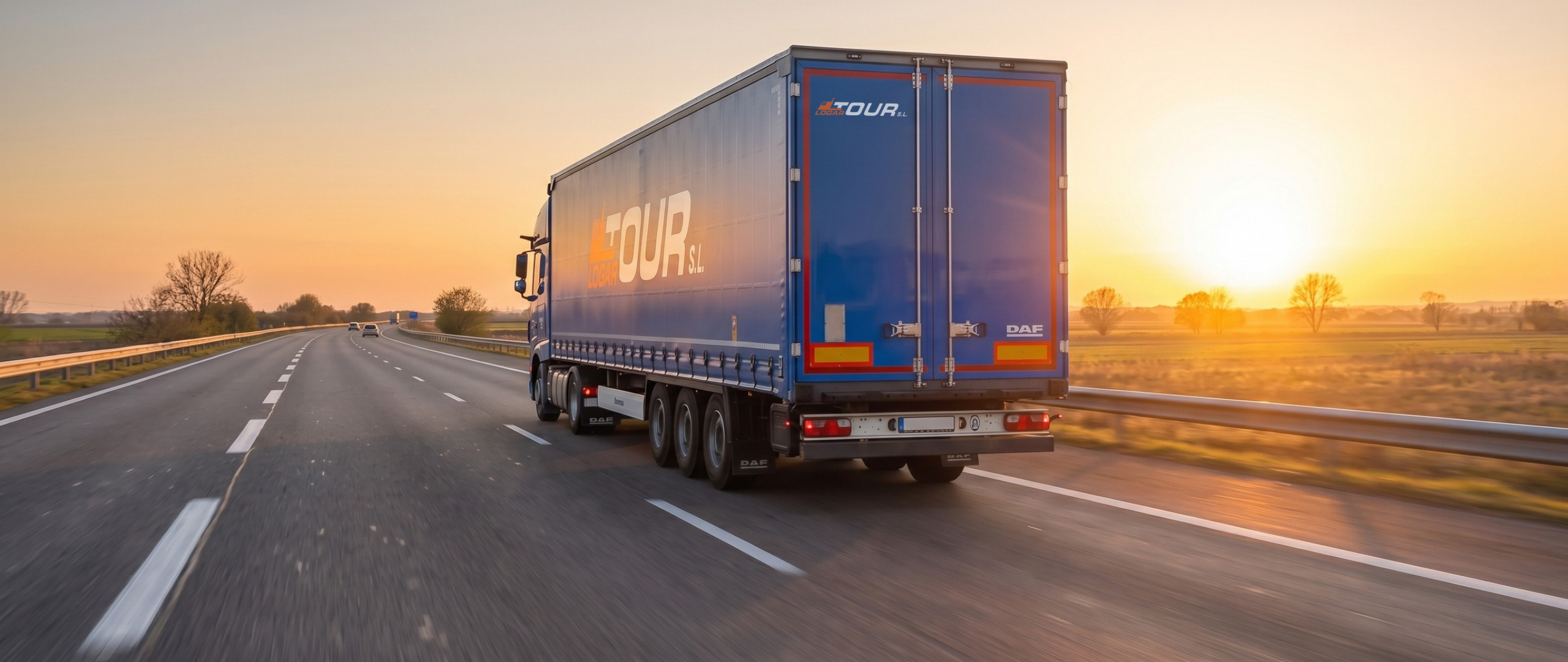
La correcta planificación del transporte de mercancías es determinante para la rentabilidad de las empresas y la eficiencia de su cadena de suministro. Cada operación comercial presenta requisitos específicos de volumen, plazos y presupuesto, por lo que no siempre es necesario ni conveniente contratar un vehículo en exclusiva.
There are two main types of road transport: less-than-truckload (LTL) and full truckload (FTL). Understanding how each works, as well as their advantages and limitations, is essential for optimising logistics costs, avoiding delays and ensuring that the cargo reaches its destination in the best possible condition.
What is less-than-lorry-load (LTL) freight?
Groupage transport, also known technically as LTL (Less Than Truckload) or consolidated freight, involves consolidating shipments from different customers – whose goods are fully compatible – into a single vehicle.
En este modelo, la empresa no asume el coste del camión completo, sino únicamente la tarifa correspondiente al espacio físico (habitualmente medido en palets o metros lineales de suelo) y al peso que su carga ocupa en el remolque.
As we discussed in our guide, groupage offers a strategic alternative for distributors, garages and manufacturers who handle frequent small- and medium-volume shipments and need to supply various locations without utilising the full capacity of a lorry.
Advantages of consolidated freight
Direct cost optimisation: This allows you to pay solely for the contracted volume, drastically reducing the unit logistics cost of partial shipments.
Flexibility in dispatch: Avoids tying up capital and the build-up of unnecessary stock in the warehouse, facilitating regular shipments to customers or distribution centres.
Sustainability and reducing environmental impact: By improving the effective utilisation of vehicles and optimising delivery routes, empty runs and transport-related emissions are reduced.
Continuous monitoring and traceability: Although each consignment shares space with goods from other consignors, it is properly identified, documented and monitored throughout its journey.
What is a full truckload (FTL)?
Full Truckload (FTL) is a logistics service in which a vehicle is dedicated exclusively to a single shipper to make a direct journey from the point of origin to the point of unloading, without any intermediate handling or consolidation of third-party goods.
This method is the standard choice when handling high volumes of goods, heavy cargo or priority shipments where adherence to timetables is critical.
Advantages of a full load
- Reduced transit times: As there is no need to stop at logistics hubs for groupage, consolidation or last-mile distribution, the journey is direct and delivery times are significantly reduced.
- Minimal handling of the cargo: The goods are stowed and secured at the point of loading and are not handled again until they reach their destination, thereby minimising the risk of incidents or damage in transit.
- Total vehicle capacity: Makes it easier to load large orders, bulky goods, industrial machinery or items which, due to their size, require the full use of the trailer.
- Bespoke planning: This enables loading and delivery times to be set that are precisely tailored to the internal operations of factories and warehouses.
Key differences between groupage and full load
Parameter
Less-than-truckload (LTL)
Full Truckload (FTL)
Truck load capacity
Shared amongst several senders
Exclusive to a single client
Cost structure
Promotional charge based on space and weight occupied
Fixed rate per journey / dedicated vehicle
Routes and stops
With stopovers for consolidation or delivery
Direct route from start to finish
Manipulation
It requires sorting and transhipment on platforms
Loading at the point of origin and unloading at the destination
Delivery time
Subject to transit times and consolidation
Shorter journey times
Usual volume
From 1 to approximately 10–12 pallets
Shipments of more than 12–14 pallets or a full trailer
When should you opt for groupage or a full load?
Para definir qué alternativa es más ventajosa para cada operación logística, conviene evaluar cuatro factores clave:
- Shipment volume and weight: If the order takes up more than half the vehicle’s capacity (or exceeds 12 European pallets), the cost of a full load usually more than makes up for the cost of groupage. For smaller shipments, groupage is the most efficient solution.
- Level of urgency and production model: In supply chains operating under strict methodologies such as Just-in-Time (JIT), where a delay jeopardises production line operations, full-load consignments offer maximum speed and punctuality. If the delivery window allows for scheduled routes, groupage consignments perform reliably.
- Characteristics of the goods: Certain consignments with specific requirements, chemicals that require specific stowage regulations, or high-value-added items may require dedicated vehicles to ensure they remain fully intact. Other standardised and palletised goods may be transported as groupage, provided there is technical and legal compatibility between the products.
- Cost and frequency: For businesses with ongoing shipments to different locations, groupage avoids the need to delay deliveries whilst waiting for a lorry to be filled, thereby improving service to the end customer
The importance of synchronisation in industrial sectors
In sectors with high technical requirements, such as the automotive and chemical industries, the choice between groupage and full load does not depend solely on the price per pallet. Factors such as synchronisation with assembly plants, real-time traceability and strict adherence to agreed time slots all come into play.
The integration of transport management systems (TMS) and route monitoring ensures that both groupage and dedicated transport services maintain the standards of visibility and safety required by the most demanding industrial environments.
Why choose Logartour?
At Logartour, we design domestic and international road transport solutions tailored to each client’s specific operational requirements. We have the necessary experience and infrastructure to manage both full loads and groupage services with the same level of rigour.
Our operational commitment is based on:
- On-time delivery: Rigorous route planning to ensure that agreed deadlines are met.
- Real-time traceability: Monitoring the status and location of consignments using advanced management tools.
- A versatile and customised fleet: Vehicles designed for the safe transport of palletised goods, industrial components and products with specific requirements.
- Personalised service and technical advice: We analyse each consignment to recommend the type of freight that best optimises delivery times and costs.
Frequently asked questions about groupage and full loads
What do the abbreviations LTL and FTL stand for?
LTL stands for Less Than Truckload (a shipment smaller than a full lorry load or groupage), a method in which goods from different customers are consolidated. FTL stands for Full Truckload, where a single customer books the entire capacity of the lorry for their exclusive use.
How many pallets does a full load usually need to consist of to be worthwhile?
As a general rule, when a consignment exceeds 10 or 12 European pallets of non-stackable goods (or accounts for more than half of the vehicle’s maximum authorised volume or weight), a full load is usually more competitive in terms of both cost and delivery times.
Can chemical goods or technical products be transported as groupage?
Yes, provided that the relevant regulations governing the carriage of goods are complied with and that the loads carried in the same vehicle are fully compatible. A specialist operator assesses the nature of the goods in advance to ensure they are stowed safely and in accordance with the law.
¿Cómo se asegura la puntualidad en los envíos de grupaje?
Through optimised route planning and the use of TMS systems that monitor the various stages of collection, consolidation and delivery in real time.